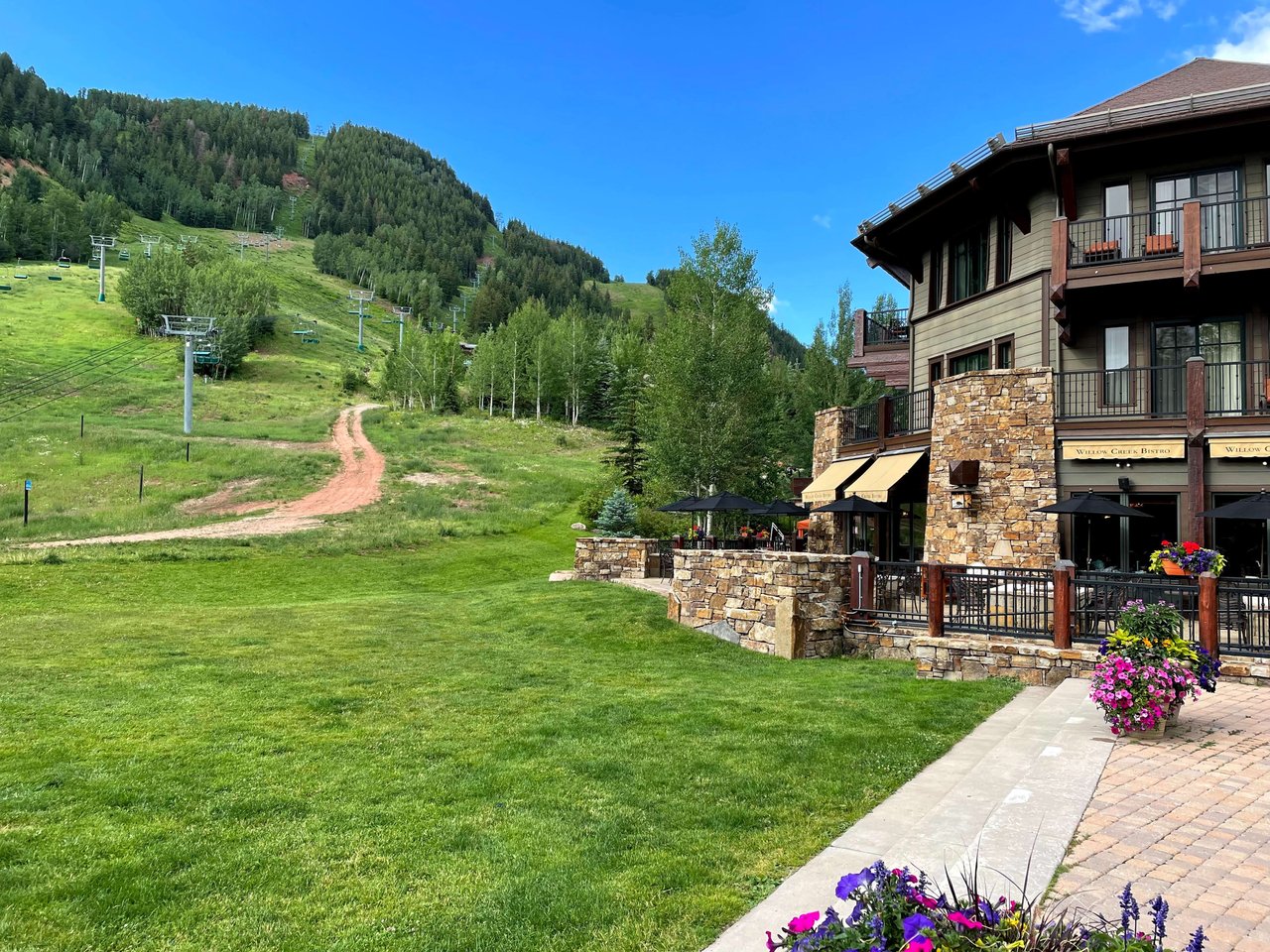

Drive up Knollwood and you will not see a border. There is no sign, no fence line, nothing that marks a change in jurisdiction. But if you buy a house on the north side of Highway 82 in Knollwood, you owe the City of Aspen's real estate transfer tax at closing. Buy on the river side of that same road, and you do not. Same neighborhood name. Same school district. Same view of the same mountain. Different tax bill, and the difference on a typical Aspen sale runs into the tens of thousands of dollars.
That gap is not a quirk buried in fine print. It is the product of a decades-long annexation history that most listing sheets never mention and most out-of-market buyers never think to ask about until a closing statement lands in their inbox with a number they were not expecting.
A Tax With Two Names and One Address Problem
The City of Aspen's Real Estate Transfer Tax, known locally as RETT, runs about 1.5% of the closing price on any sale that falls within city limits, and it is the buyer's obligation by code. It is really two taxes stacked together. One percentage point goes to the city's affordable housing fund, a measure Aspen voters approved back in 1989 specifically to address the housing shortage, with the first $100,000 of a sale price excluded from that portion. Absent another vote, that piece of the tax is set to expire at the end of 2060. The remaining half point funds the Wheeler Opera House, a tax that dates to 1978 and has since been extended through 2039. In November 2021, Aspen voters expanded that arts portion to also cover programming at the Red Brick Center for the Arts and removed a $100,000 cap that had limited how much of it could go to arts grants.
None of that is unusual for a Colorado mountain town. What is easy to miss is that the tax only applies inside the city limits of Aspen. Step outside that boundary into unincorporated Pitkin County, and the tax simply does not exist, no matter how "Aspen" the address feels.
Where Annexation Drew the Line
The boundary was not drawn with real estate marketing in mind. It followed decades of piecemeal annexation, and the result is a map that splits several well-known Aspen-area neighborhoods right down the middle.
Some pockets are unambiguously inside the city and owe the tax. Five Trees, along Five Trees Lane, was originally part of Pitkin County before it was annexed into Aspen. Maroon Creek was annexed as well. Aspen Highlands, including the Thunderbowl Townhomes, sits inside city limits under its own special district. McSkimming and Eastwood are also within the city.
Others sit outside the boundary and owe nothing. Meadowood is unincorporated Pitkin County property, and in a small trade-off for staying outside the growth boundary, homeowners there get an extra 2,528 square feet of allowable floor area as their share of the neighborhood's open space. Mountain Valley, a 106-lot subdivision, is also in the county and carries no RETT obligation.
Then there are the neighborhoods where the line runs through the middle of the place itself. Knollwood splits on which side of Highway 82 a parcel sits. Red Mountain splits too, with the lower slope inside city limits and the upper slope in the county, and the rough dividing line is the Rio Grande Trail. Red Butte Drive, up on the ridge of Red Mountain, falls on the taxed side.
If you are shopping by neighborhood name alone, you are working with incomplete information. The name tells you the view. It does not tell you the tax.
What the Difference Actually Costs
Run the math on a $3 million purchase inside Aspen city limits. The housing fund portion applies to the amount above the $100,000 exclusion, so 1% of $2.9 million comes to roughly $29,000. The Wheeler and arts portion adds another 0.5% of the full $3 million, close to $15,000. Together that is somewhere near $44,000 due at closing, on top of everything else a buyer is already budgeting for.
Buy the same house for the same price in Meadowood or Mountain Valley, and that line item disappears entirely.
For buyers weighing Aspen against Snowmass Village, the comparison shifts again rather than resolving. Snowmass Village carries its own 1% transfer tax, and properties inside the Base Village Metro District pay an additional 1% on top of that, bringing the total there to 2%. A buyer comparing a $3 million Aspen home against a $3 million Base Village condo is not just comparing price per square foot. They are comparing two entirely different tax structures layered onto two entirely different governing boundaries, and getting the comparison right requires knowing which side of which line each property sits on.
Money You Can Watch Get Spent
It is worth seeing where this tax actually goes, because right now it is visibly at work. Construction started this spring on the Lumberyard, the city's largest affordable housing project, on an 11-acre former industrial site along Highway 82 near the Airport Business Center. Aspen City Council approved the financing in late March 2026, and developer Gorman & Company began work on the first of three buildings shortly after, a 104-unit structure expected to be ready for occupancy in 2028. The full project, once its second phase is approved in 2027 and completed by 2029, is projected to deliver 277 deed-restricted rental units at a total development cost near $360 million.
City council member John Doyle pushed back on the idea that Aspen taxpayers are footing that entire bill, pointing out that Gorman and other outside sources are covering a substantial share of the first phase's cost alongside the city's contribution. RETT revenue is one of the funding streams behind that kind of project, alongside state grants and private capital, which means the tax a buyer pays at closing is tied to a building going up across the highway right now, not an abstract fund somewhere.
A Second Layer That Hasn't Landed Yet
Buyers should also know that Colorado lawmakers introduced a bill earlier this year that could eventually stack a new tax on top of the existing RETT structure. The proposal, sponsored in part by Representative Elizabeth Velasco of Glenwood Springs, whose district includes Aspen, would let local governments ask voters to approve a vacancy tax on homes that sit empty most of the year. Even if that bill clears the legislature, any actual tax still requires a separate local vote before it applies anywhere, so nothing changes at closing tables today. Supporters pointed to regional data showing that some mountain counties have vacancy rates as high as 70% based on 2020 Census figures, and framed the idea as a way to nudge more of that housing stock toward local renters. It is worth watching if you are structuring a purchase as a part-time second home rather than a primary residence, but confirm its current status before treating it as settled either way.
Before You Write the Offer
A few steps can save a buyer from an unpleasant surprise at the closing table.
- Confirm the parcel's jurisdiction before you get attached to a price. Pitkin County's own GIS mapping tool, known as GISMO, lets you look up a specific address for its zoning, parcel lines, and urban growth boundary status rather than relying on a neighborhood's reputation.
- Ask your title company to confirm RETT applicability in writing as part of the closing estimate, not as an afterthought once documents are drawn up.
- If you are comparing homes across Aspen, Snowmass Village, and unincorporated Pitkin County, ask for the transfer tax line item on each option before you compare them on price per square foot alone.
- If the tax applies, factor it into your offer and your net proceeds conversation early. Like any closing cost, responsibility for it can be discussed in the contract, but the code default has the buyer paying it.
A Few Straight Answers
Who actually pays the tax at closing? By city code, the purchasing party is responsible for Aspen's RETT. Like other closing costs, the parties can negotiate who covers it in the contract itself, but the legal default sits with the buyer.
Are there exemptions? Yes, in a few defined situations. Existing deed-restricted affordable housing units are exempt from the tax outright. Certain foreclosure-related transfers are also exempt, provided the holding party intends to resell the property within two years.
How do I find out if my specific address falls inside or outside the boundary? Do not rely on the neighborhood name. Check the parcel against Pitkin County's GIS mapping system, or ask your title company to confirm jurisdiction as part of your closing estimate before you write an offer.
None of this changes whether a given home is right for you. It changes what you should be budgeting before you fall for it. If you are comparing properties across Aspen's city limits and the surrounding county, or trying to understand how a specific address nets out once every closing cost is on the table, that is exactly the kind of groundwork PJ Bory walks clients through before an offer ever gets written. For a deeper look at what else shows up on an Aspen closing statement, see our guide to Aspen buyer closing costs, and if you are ready to see what is currently available across the city and county line, start with our Aspen neighborhood page or request a home valuation to see where your numbers land.