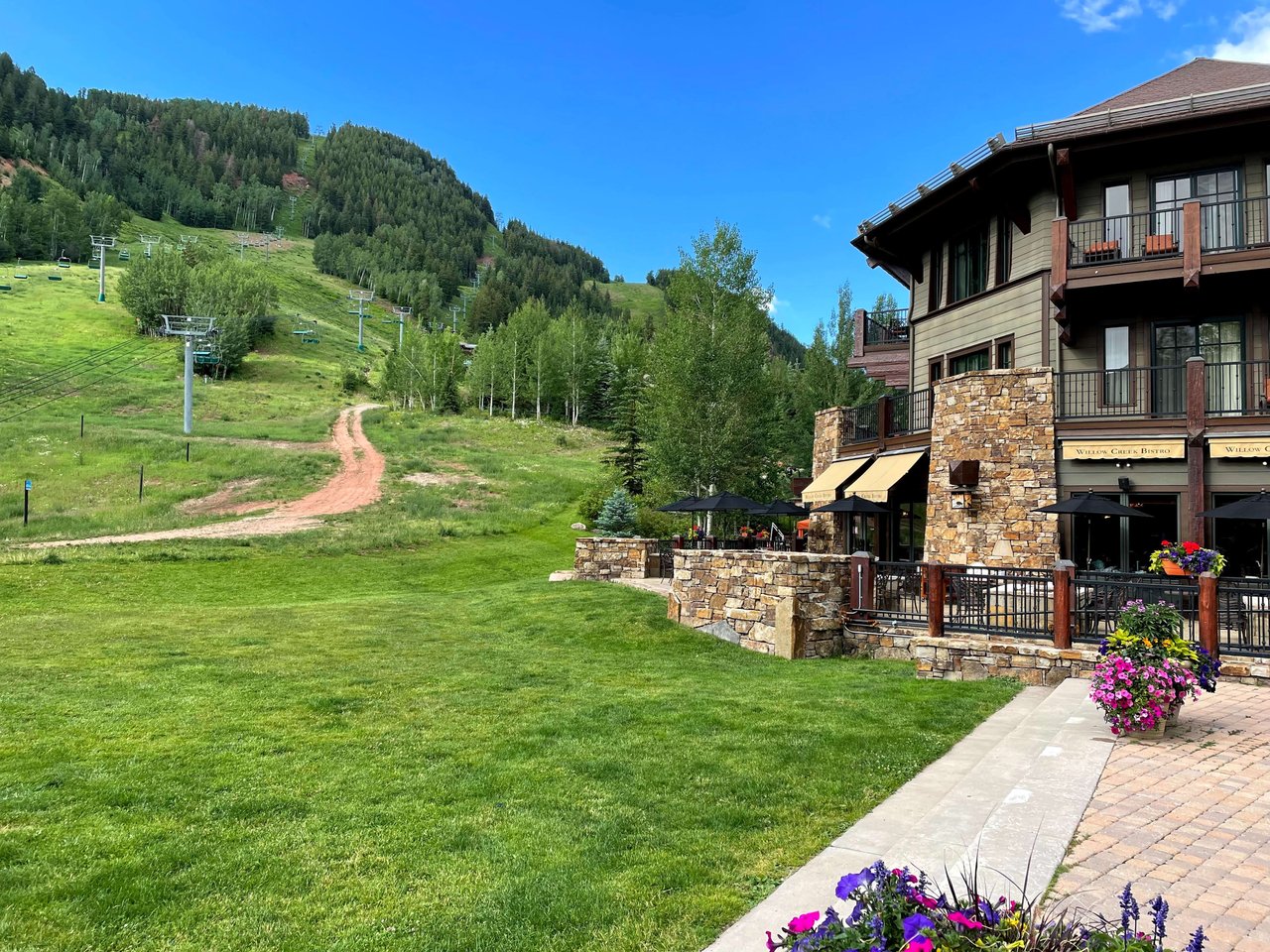

A buyer walks a forty-acre parcel along McLain Flats Road, sees the river frontage, the barn, the irrigated pasture, and assumes the price on the listing covers all of it. Then the title company sends over the commitment, and there's a line near the bottom excluding water rights from coverage. That's the moment most buyers realize Woody Creek real estate comes in two parts: the dirt, and the water that makes the dirt worth ranching, and closing on one does not automatically close on the other.
This isn't a technicality that only matters to hobby farmers. Water in this part of the Roaring Fork Valley has become expensive enough, and legally distinct enough from the land it sits on, that treating it as a footnote in a purchase contract is how buyers end up with pasture that can't be irrigated or a well that can't legally support the use they had planned.
The Deed Doesn't Carry the Water
Colorado treats water rights as real property, but it doesn't convey them the way it conveys a house. A ditch company share, the kind that irrigates most of Woody Creek's ranch land, transfers by stock assignment through the ditch company itself, not through the warranty deed. The company then issues a new certificate in the buyer's name and updates its own shareholder registry. If that assignment never happens, the buyer can hold clear title to the land and still not own the water that's supposed to come with it.
Wells work differently but carry their own deadline. Colorado law requires a buyer who takes ownership of a small-capacity or household well to file a change-of-owner form with the state within 60 days of closing, or to register the well for the first time within 63 days if it was never formally recorded. That filing usually happens as part of the closing, but it's the buyer's legal responsibility, not the title company's courtesy.
And then there's the coverage gap. Standard title insurance protects the land and the structures on it. It typically does not extend the same protection to the water right attached to that land, which means a break in the chain of title on a ditch share, or a well permit that doesn't match what the seller represented, can become the buyer's problem well after the closing table.
What the County Just Paid For Water
If you want a sense of how fast water has appreciated in this valley, look at what Pitkin County itself has been paying to buy it back.
In January 2026, the county agreed to acquire 60 shares from the Twin Lakes Reservoir and Canal Company and 34 shares from the Fountain Mutual Ditch Company for a combined $6.5 million, securing about 71 acre-feet of water. Only 45 of those acre-feet are the Western Slope water the county actually wanted, water currently diverted east through the Twin Lakes transmountain system that the county can now release back into the Roaring Fork during low-flow periods. Measured against the full 71 acre-feet, that works out to roughly $91,500 per acre-foot. Measured against just the 45 acre-feet the county can actually use, it's closer to $144,000.
Six months later, in July 2026, the county went back for more: 4.68 additional Twin Lakes shares, about 3.5 acre-feet, for $442,500 including transaction costs. That's roughly $126,000 per acre-foot, and this time the county's own Healthy Rivers advisory board recommended against the purchase, arguing the cost couldn't be justified against a return of "potentially only one additional cubic foot per second for two days." Commissioners approved it anyway.
These are municipal river-restoration deals, not typical ranch sales, so they aren't a direct stand-in for what a private ditch share trades for today. But a decade ago, the Aspen Daily News reported that water rights in this same watershed sold for $1,500 to $3,500 per acre-foot in ordinary transactions, climbing to as much as $10,000 in tributaries where unclaimed water was scarce. The county's own 2026 numbers sit ten to forty times higher than that range. Some of that gap is the difference between a private agricultural sale and a government buying back water it desperately wants. Some of it reflects a river basin that's genuinely tighter than it was ten years ago. Roughly 40% of the Roaring Fork's headwaters are diverted east through the Independence Pass Transmountain Diversion System to serve Colorado Springs, Pueblo, and Aurora, which is exactly why the county is now spending millions to buy some of it back. Either way, a buyer who assumes a Woody Creek ranch's water rights are worth what they were when the property last traded is working from an outdated number.
The Ditch That Built the Ranches Along McLain Flats
Much of the senior water serving Woody Creek's ranch land runs through the Salvation Ditch, which diverts from the Roaring Fork just east of Aspen and carries water along the flank of Red Mountain to properties on and around McLain Flats Road. Because the ditch's priority date reaches back to the early 1900s, Colorado's first-in-time, first-in-right system puts its shareholders near the front of the line during dry years, when junior rights can go unfilled entirely.
That seniority is part of what made properties like Chaparral and Aspen Valley Ranch, two historic Woody Creek ranching parcels later developed into upscale subdivisions, attractive to their original buyers in the first place. The water wasn't an amenity attached to the land. For a working or ornamental ranch, it was the reason the land could function as one.
"Water, like land, is worth what somebody is willing to pay for it."
The Aspen Daily News quoted the Salvation Ditch's manager saying it this way in 2017, and it still holds: the ditch's senior shares have long commanded a premium over junior water elsewhere in the valley because reliability has a price, and in a basin where the county is now paying six figures per acre-foot to get water back, that reliability is worth more than it used to be.
Exempt Well or Court Decree: Two Very Different Closings
Not every water source in Woody Creek carries the same complexity. Colorado sorts wells into categories that determine how much scrutiny a buyer needs before closing.
| Well type | Typical acreage | What it covers | What to verify |
|---|---|---|---|
| Domestic exempt | 35 acres or more | House, livestock, up to one acre of irrigation | Confirmed by permit number, no augmentation plan required |
| Household-only exempt | Under 35 acres | Household use only, no outdoor watering | Cannot legally support a garden, animals, or a hot tub without separate approval |
| Non-exempt, tributary | Varies | Any use, but subject to the priority system | Requires a decreed and funded augmentation plan before pumping |
A water analysis presented to Pitkin County commissioners this year found that 62% of existing wells in the county are exempt, meaning most rural properties fall into the simpler categories above. The remaining wells depend on augmentation plans, court-approved arrangements that replace the water a well pumps so senior downstream rights aren't injured. The same analysis found Pitkin County's average water use running at 214 gallons per person per day, well above the statewide average of 164, a gap the county attributes partly to larger homes with more fixtures per household. If a Woody Creek property is on a non-exempt well, a buyer's due diligence isn't complete until the augmentation plan has been confirmed as already decreed and already funded, not simply proposed. A plan that's still working its way through water court is a liability, not an asset.
A New Wrinkle If Rental Income Is Part of the Plan
For owners weighing seasonal rental income on a Woody Creek property, there's a regulatory shift worth watching. At an August 2026 work session, Pitkin County commissioners reviewed a consultant's short-term rental impact study and proposed changes that would require rural applicants on well water to provide proof their well capacity can actually support that use before a license is issued. The proposal hasn't been finalized, but it comes at a time when short-term rental licenses in unincorporated Pitkin County have already fallen 29% between April 2023 and April 2026, from 111 down to 79, and down further still from an estimated 206 properties before the county's licensing program began in 2022. An absentee owner counting on a Woody Creek ranch to generate rental income should confirm current requirements before assuming that income is guaranteed, since well capacity documentation could become one more step between purchase and permit.
Before You Write an Offer
A short list worth working through before you're at the closing table on a Woody Creek ranch or acreage parcel:
- Ask the seller for the water right's specific name, priority date, and either the court decree number or the well permit number, so it can be independently verified through the state's records rather than taken on faith.
- If ditch shares are part of the deal, confirm the ditch company will process the stock assignment and reissue the certificate in your name, separately from the deed.
- If the well is non-exempt, request documentation that the augmentation plan is decreed and funded, not pending.
- Ask your title company directly whether the policy covers the water right or only the land.
- If short-term rental income factors into your plans, check current Pitkin County requirements before assuming eligibility.
- After closing, file the required change-of-owner form with the Colorado Division of Water Resources within the statutory window.
None of this replaces a water attorney for a complex decree, but it's enough to keep a buyer from discovering a problem after the ink is dry.
Questions Buyers Ask Before They Sign
Does buying land in Woody Creek automatically include the water rights? Not automatically. Water rights must be specifically identified and conveyed, and the mechanism differs by type: ditch shares transfer through the ditch company, wells transfer through a state filing. A property listing may describe water rights loosely, but the contract and closing documents need to name them precisely.
What's the real difference between a well permit and a water right? A well permit is state approval to drill and pump. A water right, whether it's a decreed surface right or a ditch company share, is the legal entitlement to use a specific amount of water for a specific purpose. A property can have one without the other, and a buyer needs both confirmed.
Can I count on adding a short-term rental to a well-water property in Woody Creek? Current county rules don't require well capacity proof for a short-term rental license, but a proposal discussed in August 2026 would add that requirement for rural applicants. Anyone building a purchase decision around rental income should confirm the rules in effect at the time of application, not the rules that existed when the research was done.
Where do I find out if a specific well is exempt or non-exempt? The well permit itself will state its classification and allowed uses, and it can be verified through the Colorado Division of Water Resources' online well permit search. Pitkin County's own wells page is a useful starting point for understanding what to ask.
Water rights are the part of a Woody Creek transaction that rarely shows up in the listing photos and almost never gets discussed until someone asks the wrong question at the wrong time. Getting it right before an offer is written is a lot less expensive than fixing it after closing.
If you're weighing a ranch or acreage purchase in Woody Creek, or wondering what your own property's water rights are actually worth in today's market, PJ Bory has spent almost two decades working these closings and knows which questions to ask before they become problems. Search All Homes currently available in Woody Creek and see what's on the market for yourself.
This article is general information, not legal, tax or financial advice. Consult a qualified professional about your situation.